
 Save
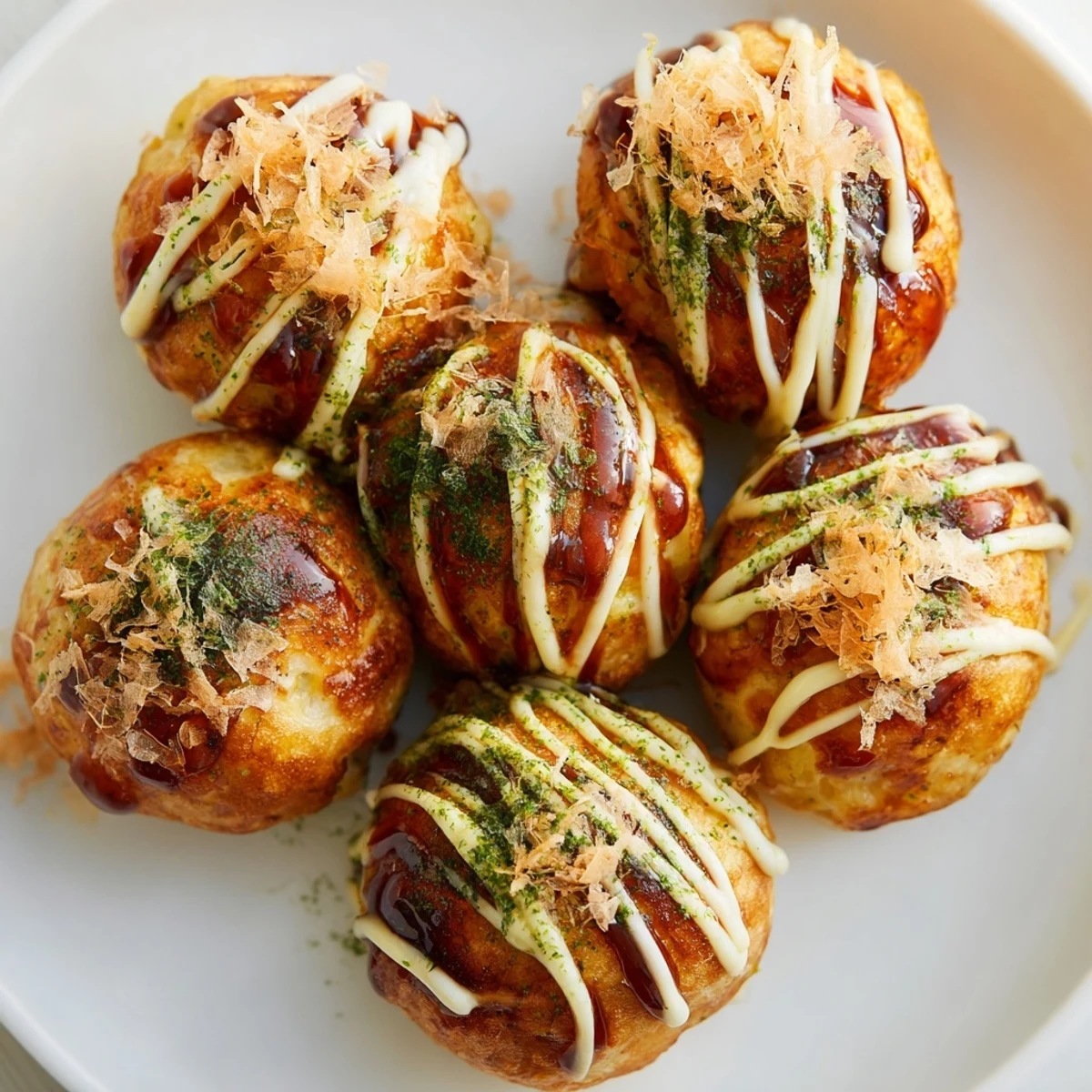
Save Master the art of making authentic Japanese takoyaki with this detailed guide. These beloved street food snacks feature a savory batter encasing tender octopus pieces, cooked until golden and crisp. The traditional topping combination of tangy sauce, creamy mayonnaise, dried seaweed, and dancing bonito flakes creates an irresistible flavor profile. While the technique requires some practice to achieve perfectly round spheres, the result is worth the effort. The batter uses dashi stock for authentic umami depth, while pickled ginger and tempura scraps add texture contrast.
The steam rising off a fresh batch of takoyaki in Osaka is something I still dream about. I'd been wandering through Dotonbori for hours, following my nose past yakitori stands and okonomiyaki grills, until I found myself at a tiny stall where an elderly woman worked two takoyaki pans with effortless precision. She handed me a paper boat with six golden balls dancing in the heat, and that first bite—crisp shell giving way to creamy custard-like batter, tender octopus, and that perfect sweet-savory sauce—stopped me in my tracks. I went back three times that week, and eventually she showed me how to get that perfect spherical shape without the balls collapsing on themselves.
Last summer, I set up a takoyaki station at my sister's birthday party. Everyone took turns at the pan, some more graceful than others, and we ended up with perfectly round balls and hilariously misshapen ones alike. The kitchen smelled like dashi and bonito, and there was something wonderful about everyone crowding around, chopsticks in hand, waiting for that moment when the balls were ready to flip. We ate them standing up, sauce dripping down our chins, laughing at the ugly ones that tasted just as good.
Ingredients
- All-purpose flour: The foundation that creates that signature batter texture, not too heavy not too light, just right for turning into golden spheres
- Eggs: They add richness and help bind everything together into that creamy interior we're chasing
- Dashi stock: This is where the soul of the dish lives, that subtle umami that makes every bite taste like Japan
- Salt and soy sauce: Just enough to wake up the flavors without overpowering the delicate dashi
- Baking powder: The secret to getting that slight lift in the batter so the centers stay tender
- Cooked octopus: Traditional and essential, those tender little cubes are the heart of each ball
- Pickled red ginger: Adds these bright little bursts of tang that cut through the richness
- Green onion: Fresh and sharp, balancing all the savory elements
- Tempura scraps: These get tucked inside and add these incredible crispy pockets throughout
- Takoyaki sauce: Sweet tangy and absolutely essential, or mix Worcestershire ketchup and soy sauce if you're in a pinch
- Japanese mayonnaise: Creamy and rich, that final drizzle that ties everything together
- Aonori and bonito flakes: The classic toppings that make it look and taste like the real deal
Instructions
- Mix your batter until smooth:
- Whisk everything together until you have a thin pourable consistency, thicker than crepe batter but thinner than pancake batter, and let it rest for a few minutes while you prep the filling ingredients.
- Get your pan ready:
- Heat that takoyaki pan over medium heat and give each compartment a light coating of oil, using a paper towel or brush to make sure every nook and cranny is coated so nothing sticks.
- Fill the holes and add the goods:
- Pour batter into each hole until it's completely full, then immediately tuck a piece of octopus into every single one before sprinkling the ginger green onion and tempura scraps on top.
- The first crucial turn:
- Wait about 1 to 2 minutes until you can see the edges starting to set and turn golden, then use your chopsticks or skewers to flip each ball 90 degrees, letting that uncooked batter spill out and start forming the bottom half of your sphere.
- Keep turning until golden:
- Continue rotating every minute or so, encouraging that batter to cook evenly and form a perfect round shape, until all sides are crisp and golden, about 8 to 10 minutes total.
- Finish and serve immediately:
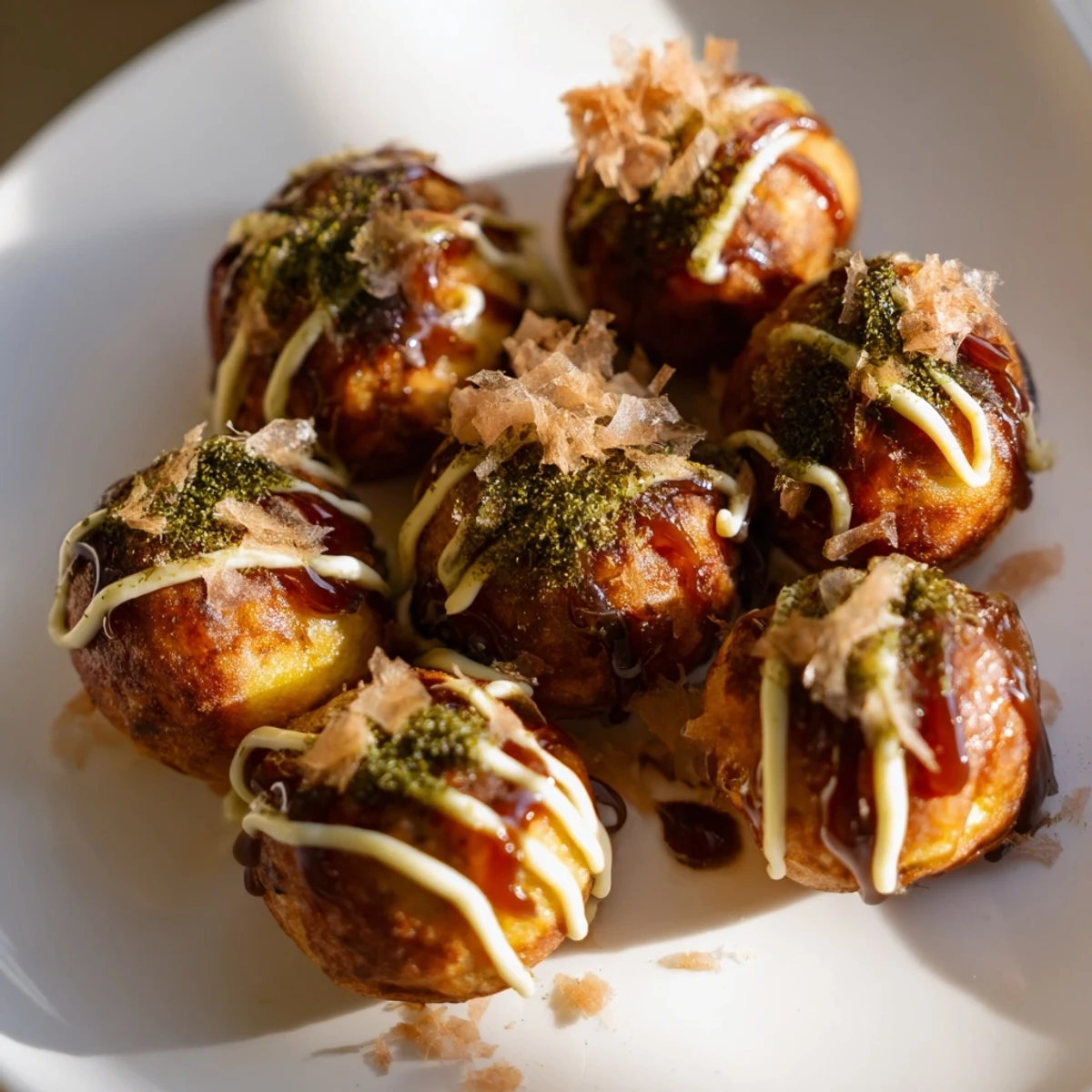
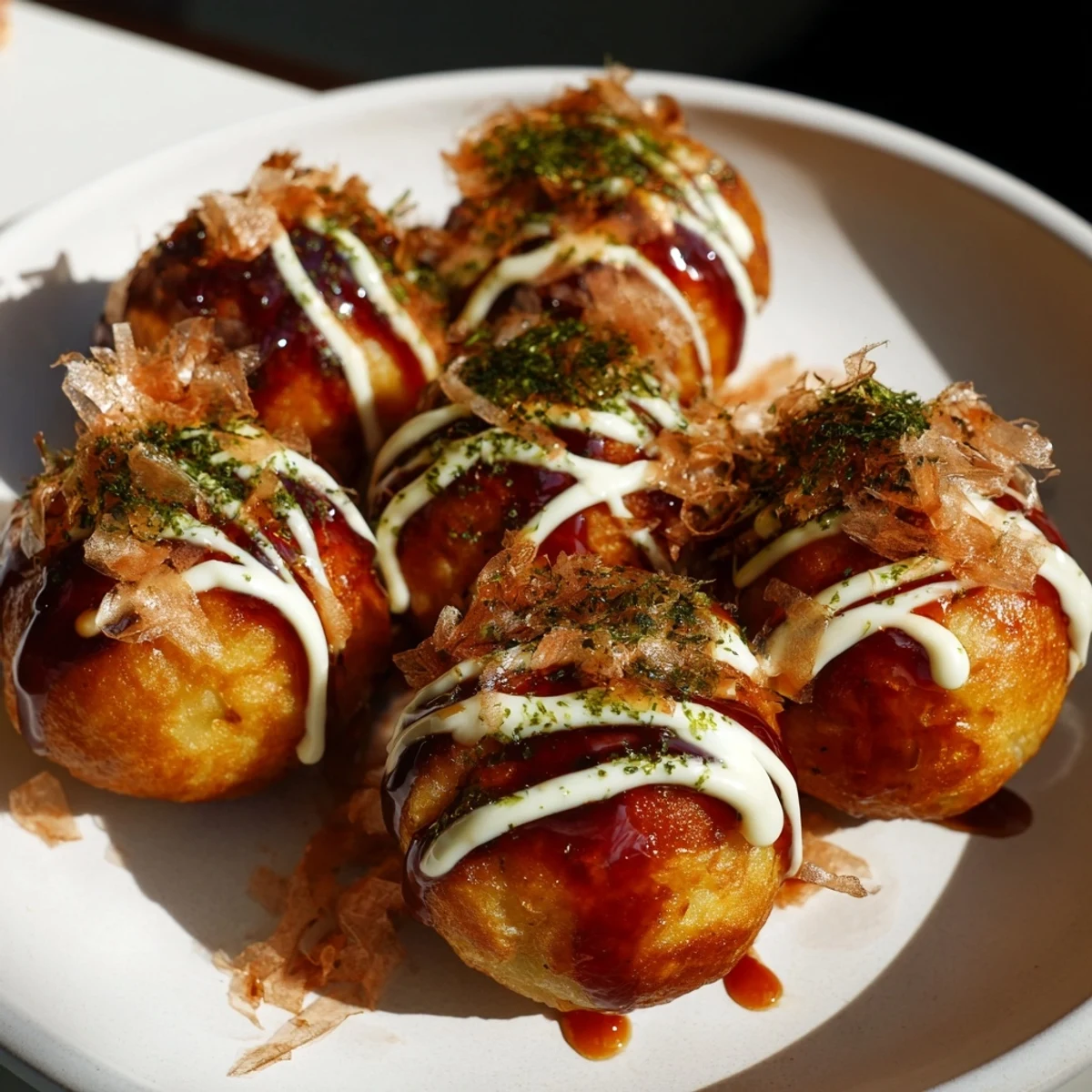
- Transfer them to a plate while they're still sizzling hot, drizzle with sauce and mayonnaise in a zigzag pattern, then finish with aonori and watch those bonito flakes dance in the heat.
 Save
Save My daughter calls these octopus hush puppies and requests them whenever we have friends over for dinner. There's something about the process of making them together, the gathering around the pan, the way everyone wants their turn at flipping, that turns cooking into a party rather than a chore.
Getting That Perfect Shape
The turning technique takes practice, and I won't lie, my first few attempts resulted in what I affectionately called takoyaki blobs. The trick is speed and confidence, hesitating just half a second can make the difference between a clean turn and a collapsed mess. I found it helps to have two skewers, one on each side, like a little Takoyaki chopstick operation.
Temperature Matters
Medium heat might feel too low, especially if you're used to high-heat searing, but takoyaki need gentle even heat to cook through before the outside burns. I've ruined batches by getting impatient and cranking up the heat, ending up with burned outsides and raw centers. Trust the medium heat and give them the time they need.
Make It Your Own
While traditional octopus is wonderful, I've discovered that cooked shrimp makes an incredible substitute, and mozzarella cheese creates this amazing pull that kids absolutely love. The batter stays the same, you're just switching out the filling, and sometimes those variations end up being the ones everyone talks about most.
- Set up a toppings bar and let everyone customize their own
- Double the recipe because these disappear faster than you think
- Practice the turning motion with an empty pan before you start
 Save
Save There's joy in the imperfect ones too, the ones that didn't quite achieve perfect sphere status but taste exactly like that Osaka street stall. Happy flipping, and may your takoyaki be round and your batter be smooth.
Recipe FAQs
- → What is takoyaki?
-
Takoyaki are Japanese street food snacks made from a savory batter poured into special half-sphere molds, filled with diced octopus, and cooked until golden brown and crispy on the outside while remaining tender inside.
- → Can I make takoyaki without a special pan?
-
A traditional takoyaki pan with half-sphere molds is essential for achieving the characteristic round shape. While some people use alternative molds like cake pop pans or mini muffin tins, the results won't be authentic takoyaki.
- → What can I substitute for octopus?
-
Cooked shrimp, squid, or even small cubes of mozzarella cheese work well as substitutes. Vegetarians can use mushrooms or konjac for a similar texture experience without seafood.
- → Why do my takoyaki fall apart when turning?
-
This usually happens when the batter hasn't set enough or is too thin. Wait until the edges are visibly firm before attempting the first turn. The batter should be pourable but not watery - similar to crepe batter consistency.
- → How do I store leftover takoyaki?
-
Takoyaki are best served immediately for optimal texture. If storing, keep refrigerated in an airtight container for up to 2 days. Reheat in a dry skillet over medium heat to restore crispiness, avoiding the microwave which makes them soggy.