
 Save
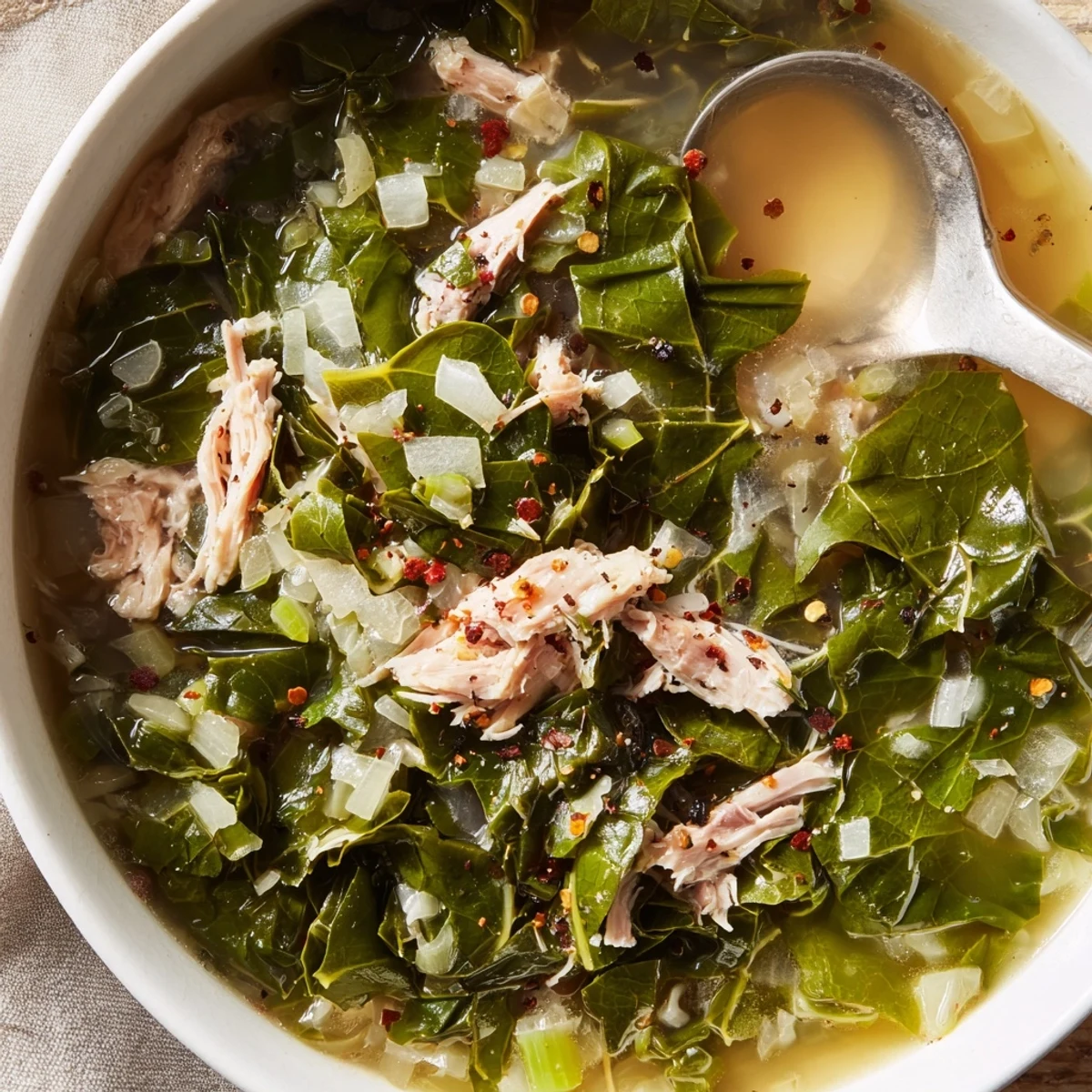
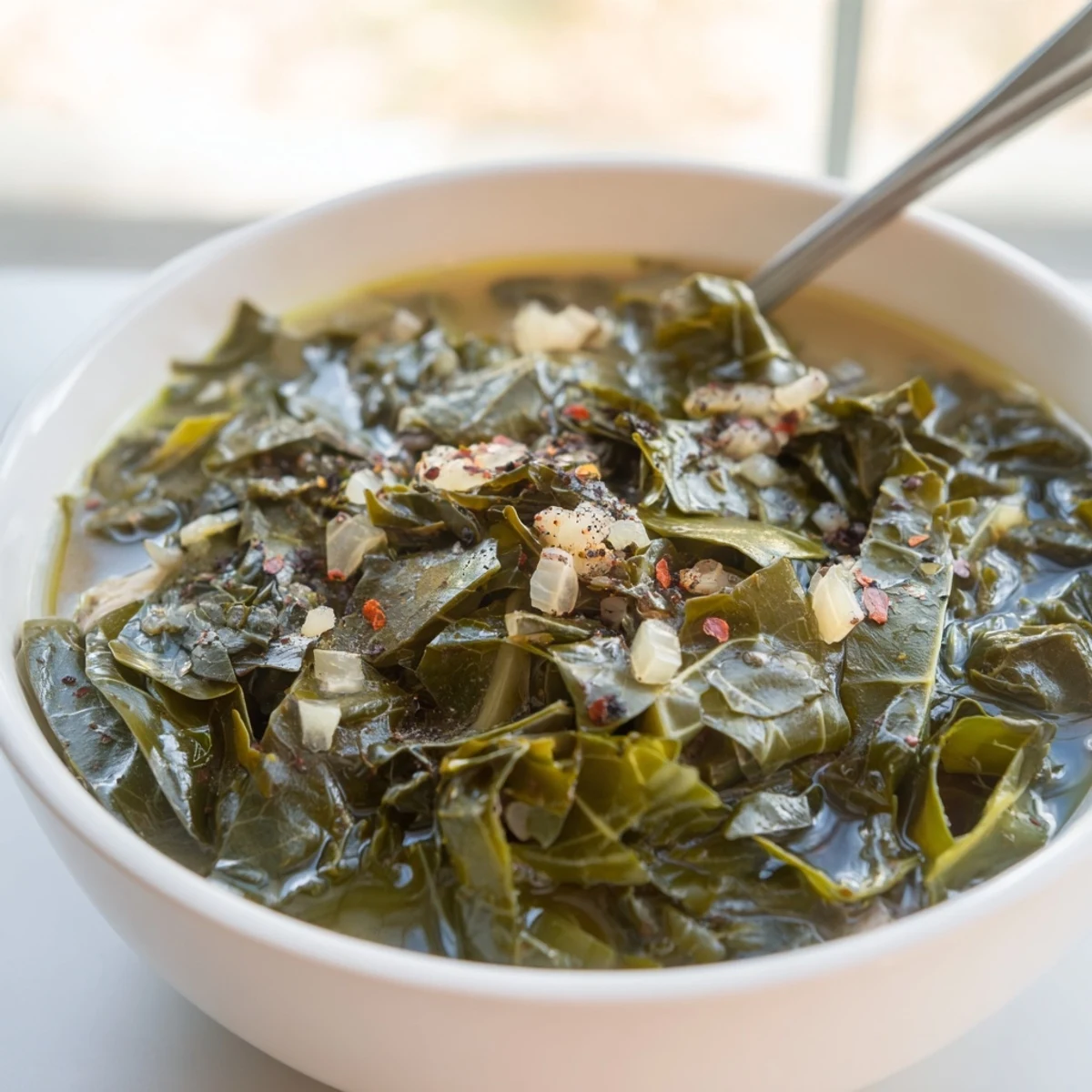
Save These Southern collard greens deliver authentic slow-cooked flavor through patient simmering with smoked turkey leg or ham hock. The greens become meltingly tender after an hour of gentle cooking, absorbing rich broth and smoky depth. Diced onion and garlic provide aromatic foundation, while apple cider vinegar adds bright acidity to balance the savory elements. Red pepper flakes bring optional warmth, and the cooking method wilts the sturdy greens into silky perfection. Serve alongside cornbread to soak up the flavorful pot liquor, or pair with barbecue for a complete Southern meal experience.
My grandmother's tiny kitchen always smelled like onions and patience whenever she made collard greens. She'd stand at her porcelain sink for what felt like forever, stripping leaves from stems with this rhythm she'd perfected over decades. The pot would bubble away on the back burner, transforming tough bitter greens into something silky and comforting. I've never quite mastered her instinct for seasoning, but this recipe gets me pretty close to those Sunday afternoons.
Last winter I made a triple batch for a neighborhood potluck when everyone was coming down with something. Three different people asked for the recipe, and someone actually went back for fourths. Something about those tender greens with that hint of vinegar just makes people feel taken care of.
Ingredients
- 2 lbs collard greens: Fresh leaves with no yellowing, stems removed because they never quite get tender enough
- 4 cups chicken broth: The foundation of flavor, though vegetable broth works beautifully for a vegetarian version
- 4 oz smoked turkey leg or ham hock: This is where that incredible smoky depth comes from, but liquid smoke can substitute
- 1 large onion: Diced small so it almost melts into the greens during the long cook
- 3 cloves garlic: Minced fresh, never the jarred stuff which has an odd aftertaste
- 1 tsp salt: Start here and adjust later, the broth might already be seasoned
- 1/2 tsp black pepper: Freshly ground makes a noticeable difference
- 1/4 tsp red pepper flakes: Just enough warmth to make things interesting without overwhelming
- 1 tbsp apple cider vinegar: The secret ingredient that cuts through the richness and brightens everything
- 2 tbsp olive oil or bacon drippings: Bacon fat adds another layer of flavor if you have it on hand
Instructions
- Start your flavor base:
- Heat your chosen fat in a large pot over medium heat, then add the diced onion and let it soften for 4 to 5 minutes until it goes translucent and fragrant.
- Add the aromatics:
- Stir in the minced garlic and cook for just 1 minute until you catch that wonderful garlic smell, being careful not to let it brown.
- Build the broth:
- Add your smoked meat if you're using it, pour in the broth, and bring everything to a gentle simmer.
- Wilt the greens:
- Add the chopped collards in batches, stirring as you go, watching how they collapse and soften to fit into the pot.
- Simmer slowly:
- Stir in your salt, pepper, and red pepper flakes, then reduce heat to low, cover, and let everything cook for about 1 hour until the greens are completely tender.
- Finish with brightness:
- Remove any bones, shred the meat and return it to the pot, then stir in the apple cider vinegar and adjust the seasoning.
 Save
Save My friend from Atlanta swears the greens taste even better the next day, and I've found she's right. Something about overnight rest lets all those flavors really get to know each other.
Making Them Vegetarian
When my sister stopped eating meat, I was worried about losing that essential smoky flavor. A few drops of liquid smoke stirred into the broth along with some extra onions gave us a surprisingly close match to the original.
The Washing Process
Collard greens can hold onto sand and grit like nothing else. I fill my sink with cold water, plunge the greens in, and let them sit for a few minutes before lifting them out and checking the bottom of the sink for remaining dirt.
Serving Suggestions
A slice of cornbread resting on the side to soak up that pot liquor is absolutely essential. Some people serve their greens over rice, but I think that's gilding the lily.
- Cornbread should still have a slightly crisp crust from being baked in a hot cast iron skillet
- Hot sauce on the table lets everyone adjust their own heat level
- A little extra vinegar passed around for those who love that bright tang
 Save
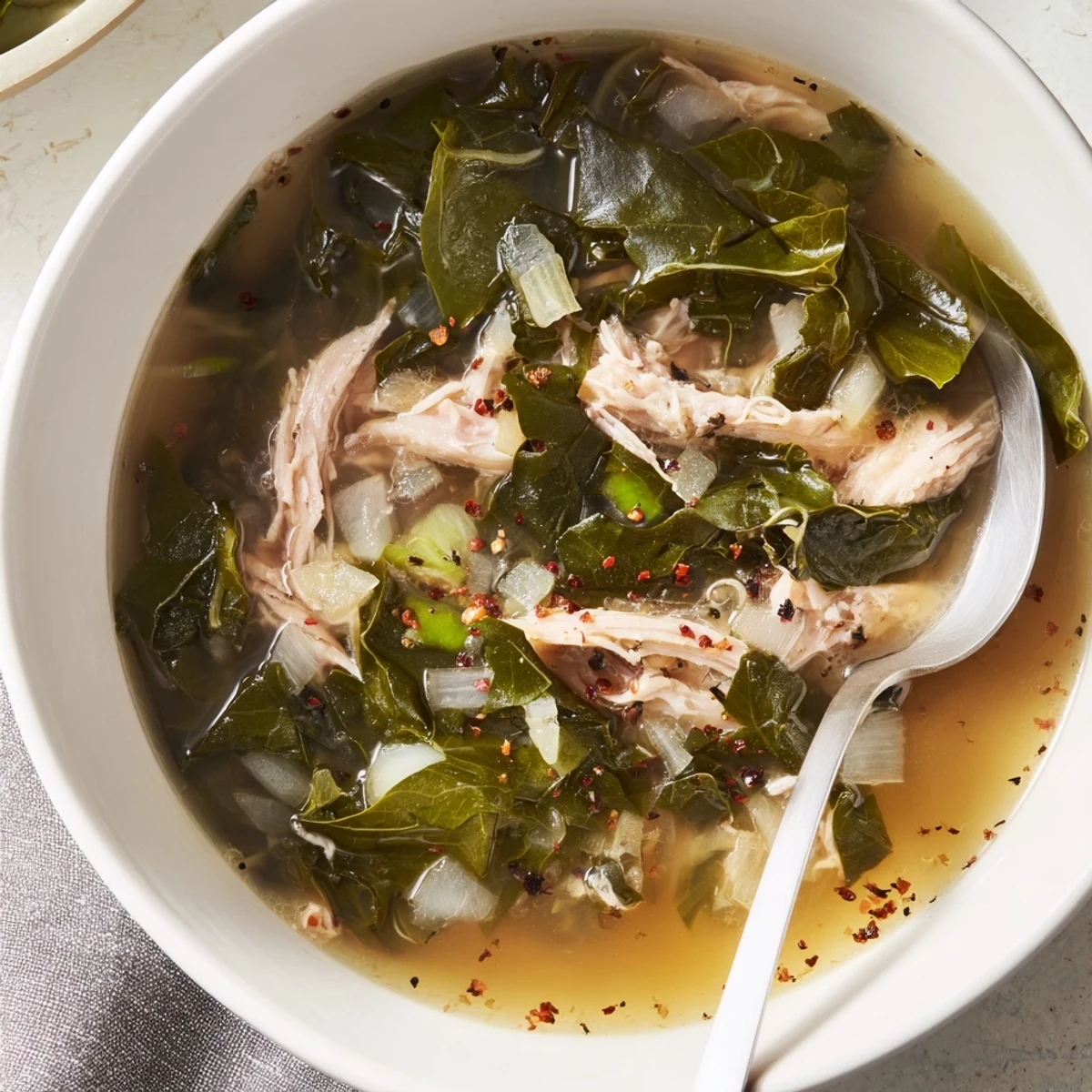
Save There's something deeply satisfying about a pot of greens bubbling away on the stove, filling the whole house with that earthy comforting aroma.
Recipe FAQs
- → How do I prepare collard greens before cooking?
-
Remove the tough stems from each leaf by folding the leaf in half and cutting along the stem. Stack the stemmed leaves and chop them into bite-sized ribbons. Rinse thoroughly in cold water to remove any grit or dirt, as collard greens can hold soil in their curly leaves.
- → Can I make this vegetarian?
-
Yes, simply omit the smoked turkey leg or ham hock and use vegetable broth instead of chicken broth. Add a few drops of liquid smoke to maintain that characteristic smoky flavor that traditional collard greens are known for.
- → Why add vinegar at the end?
-
Apple cider vinegar cuts through the rich, savory flavors and adds brightness that balances the smoky meat and bitter greens. It's a traditional finishing touch that enhances overall flavor complexity and helps tenderize the greens further.
- → How long should collard greens cook?
-
Collard greens require longer cooking time than more delicate greens. Simmer for at least 1 hour until completely tender. The longer cooking time breaks down the tough cellulose in the leaves, resulting in silky, melt-in-your-mouth texture.
- → What's the best way to store leftovers?
-
Store cooled collard greens in an airtight container in the refrigerator for up to 3 days. The flavors often improve after a day as the greens continue to absorb the seasoned broth. Reheat gently on the stove, adding a splash of broth if needed.
- → What pairs well with collard greens?
-
Cornbread is the classic accompaniment, perfect for sopping up the flavorful pot liquor. They also pair beautifully with fried chicken, barbecue ribs, black-eyed peas, or served over rice for a more substantial meal.