
 Save
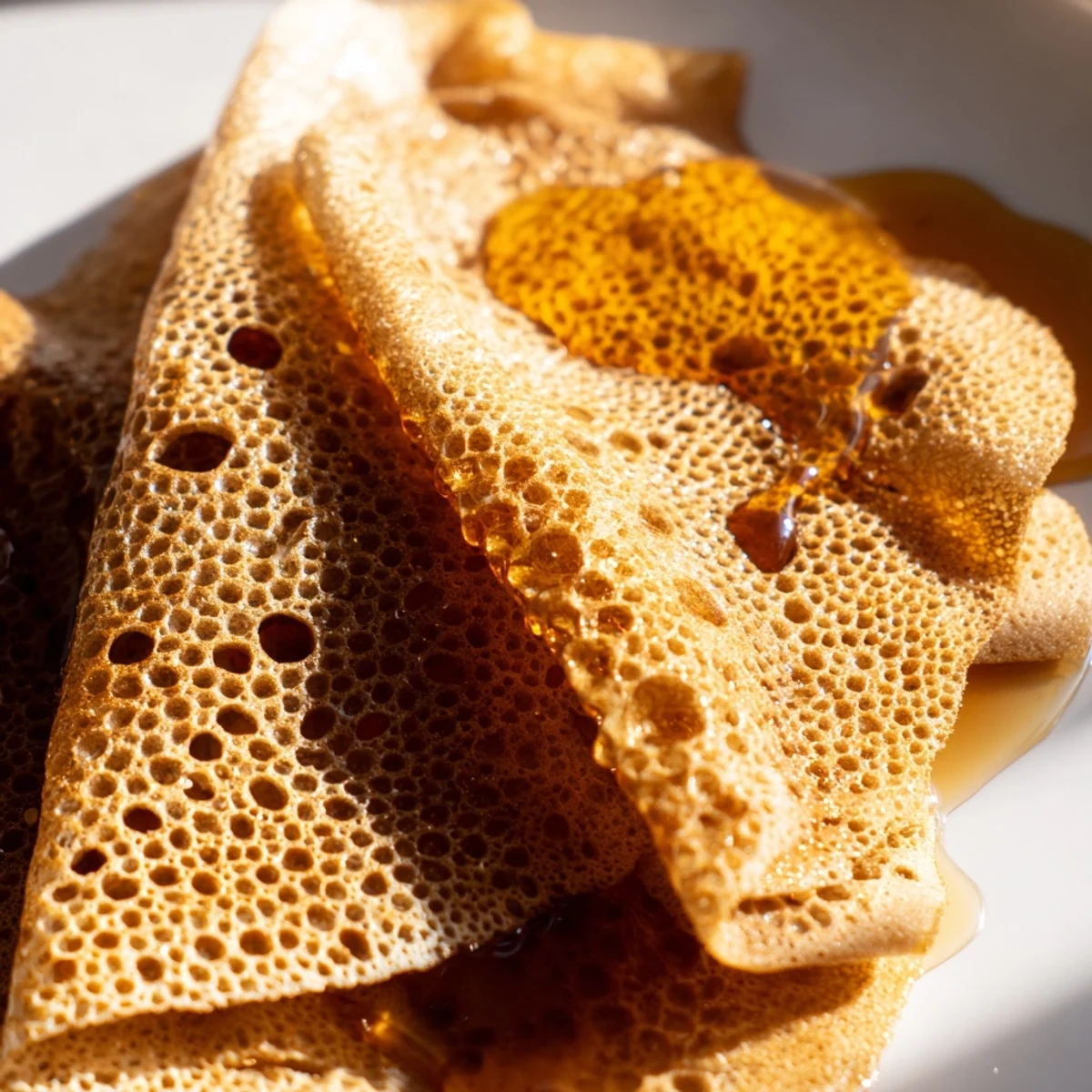
Save These traditional Moroccan baghrir feature a distinctive honeycomb texture that makes them incredibly light and spongy. The batter combines fine semolina with flour and yeast, resting to develop bubbles that create the signature porous surface during cooking.
Unlike typical pancakes, baghrir cooks on just one side until covered with tiny holes, resulting in an airy texture that perfectly absorbs melted butter and honey. The preparation is straightforward—mix, rest, and cook without flipping.
Customize your serving with plant-based alternatives for a vegan version, or add variety with jam, date syrup, or chopped nuts. The batter keeps well, making these ideal for meal prep or weekend breakfasts.
The morning I first made baghrir, my kitchen filled with the most incredible bubbling sound as the batter hit the pan. I had just returned from a trip to Marrakesh where Id watched street vendors make these spongy pancakes their hands moving with practiced ease. Mine werent perfect but that first bite drenched in butter and honey transported me right back to that bustling souk.
Last weekend my daughter helped me make a batch for breakfast. She was mesmerized watching the bubbles form across the surface like magic. We ended up eating twice as many as we planned standing around the stove dipping each warm piece directly into the butter and honey bowl.
Ingredients
- Fine semolina: This is the secret to that signature spongy texture regular cornmeal simply wont give you the same bounce
- All-purpose flour: Provides structure so the pancakes hold together without becoming dense or heavy
- Instant yeast: Works quickly to create those characteristic bubbles on the surface
- Baking powder: Gives an extra lift ensuring the baghrir are pillowy not rubbery
- Sugar: Just enough to balance the savory notes and help the yeast activate
- Salt: Essential for depth without it the pancakes will taste flat and one dimensional
- Lukewarm water: Creates a pourable batter thats thin enough to spread naturally into circles
- Unsalted butter: Melted and drizzled over warm pancakes it seeps into every honeycomb pocket
- Honey: The traditional finishing touch that adds floral sweetness to balance the slight tang from fermentation
Instructions
- Mix the dry base:
- Whisk together semolina flour instant yeast baking powder sugar and salt in a large bowl until everything is evenly distributed
- Add the water:
- Pour in the lukewarm water gradually whisking constantly to break up any lumps until you have a smooth thin batter
- Let it rest:
- Cover the bowl and let the batter sit for 30 minutes until tiny bubbles cover the surface and it has a slight yeasty smell
- Heat your pan:
- Warm a non stick skillet over medium heat until a drop of water sizzles gently across the surface
- Pour and wait:
- Ladle about 1/4 cup of batter onto the pan letting it spread naturally into a circle without touching it
- Cook one side only:
- Wait until the surface is dotted with holes the edges pull away slightly and the top looks dry and set about 2 minutes
- Keep them warm:
- Transfer each pancake to a clean kitchen towel covering them to stay warm and soft while you finish the batch
- Serve generously:
- Drizzle warm baghrir with melted butter and honey letting the liquids soak into all those little holes
 Save
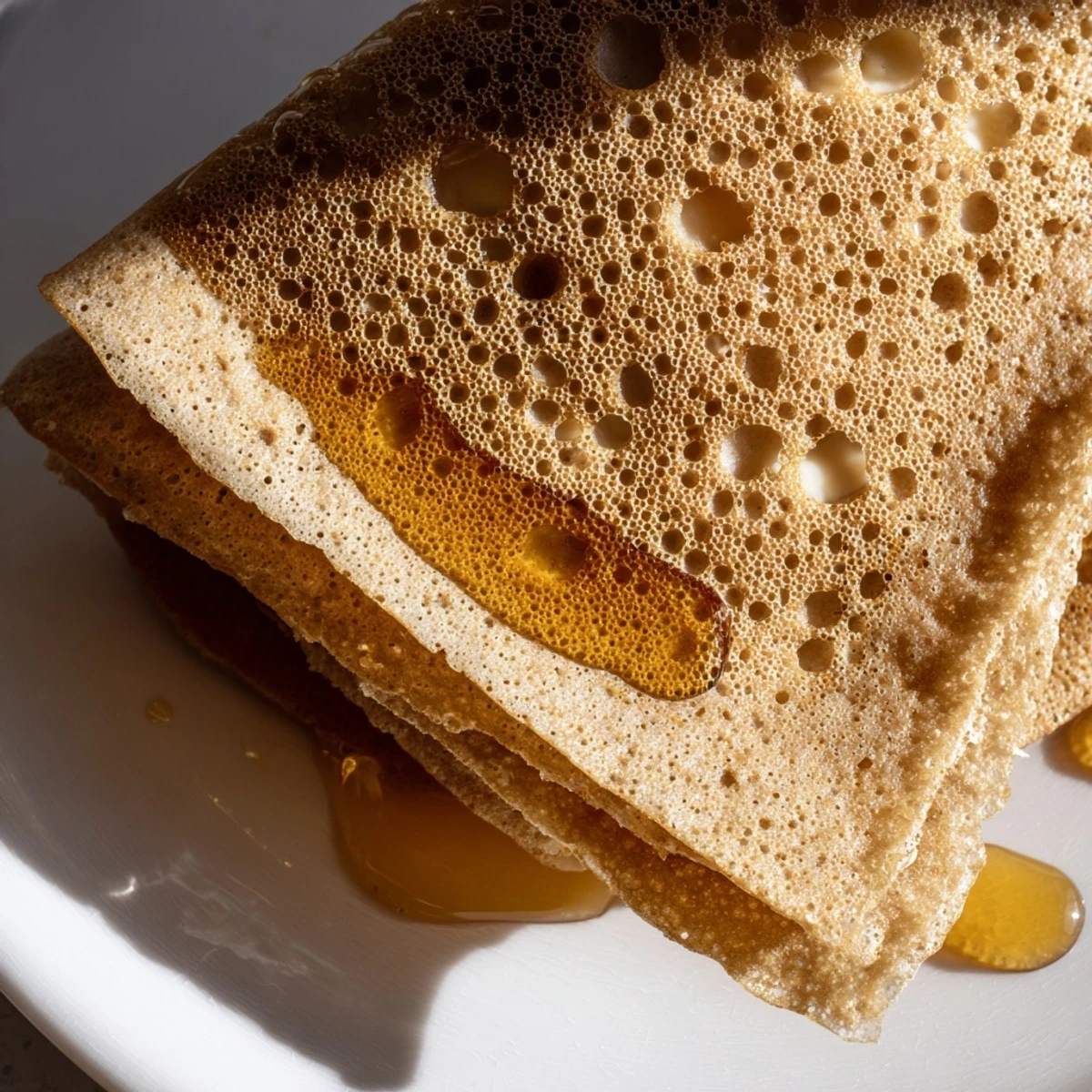
Save My friend Aicha taught me that the perfect baghrir should feel like eating a cloud. She said if your hands dont get a little messy from the butter and honey youre doing it wrong. Now whenever I make them I remember her laughter as we attempted to flip them the wrong way.
Getting The Texture Right
The batter should be thinner than American pancake batter but thicker than crepe batter. When you lift the whisk it should flow freely in a steady stream not drip in clumps. If it seems too thick after resting add another tablespoon of water and stir gently.
Serving Variations
While butter and honey is the classic Moroccan way to serve baghrir do not limit yourself. In my house we have been known to top them with jam drizzle them with date syrup or even add a sprinkle of chopped pistachios for crunch. They also make an incredible base for fresh berries and a dollop of yogurt.
Make Ahead and Storage
You can mix the batter the night before and store it in the refrigerator. The yeast will continue working creating an even more developed flavor. Let it come to room temperature for 20 minutes before cooking as cold batter will not bubble properly.
- Cooked baghrir freeze beautifully stacked between parchment paper for up to two months
- Reheat them by wrapping a few in a damp paper towel and microwaving for 20 seconds
- They actually taste better reheated because the flavors have more time to meld
 Save
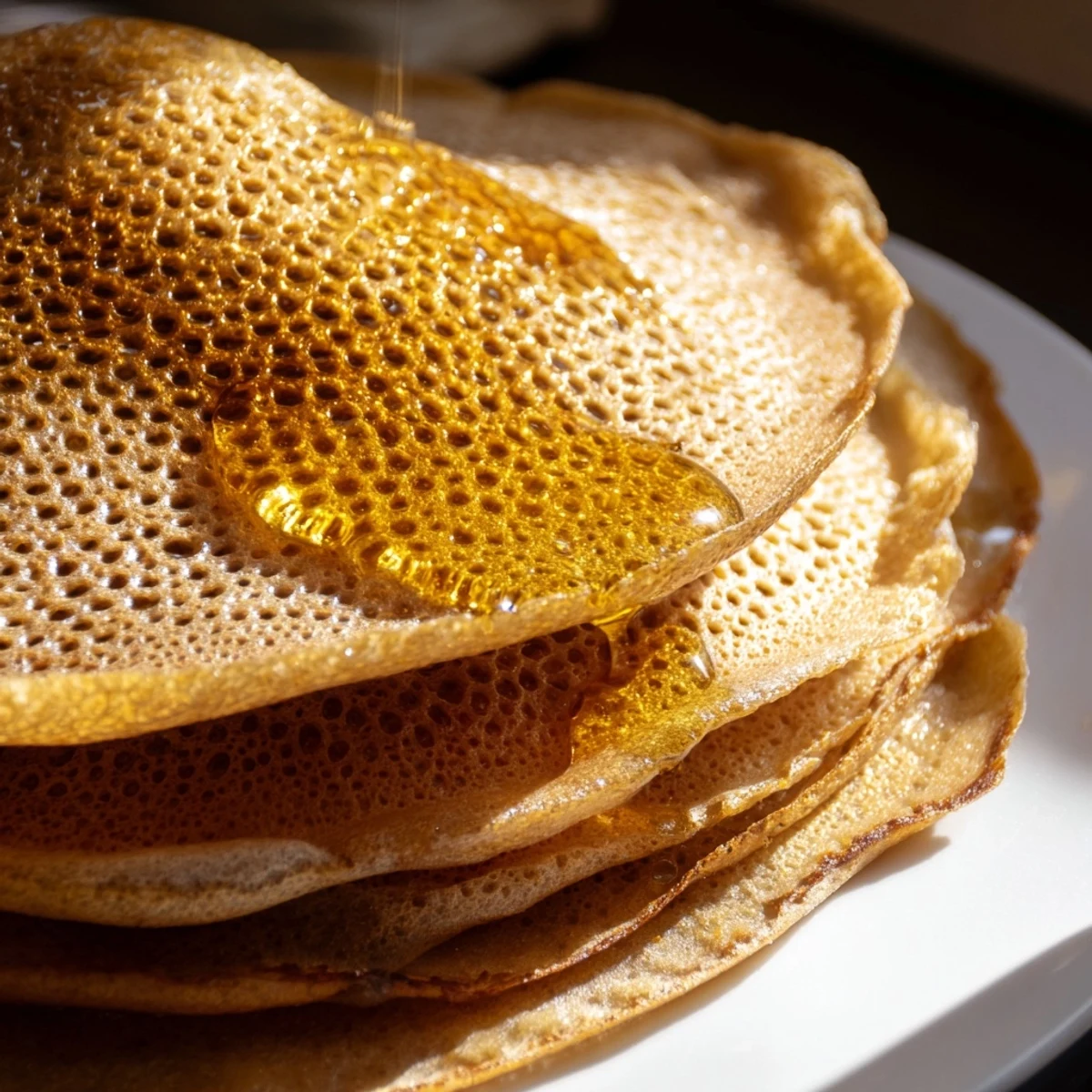
Save There is something deeply satisfying about making food that connects you to generations of cooks. Every time I see those bubbles form on the batter I feel like Im part of a delicious lineage that stretches across time and oceans.
Recipe FAQs
- → What makes baghrir different from regular pancakes?
-
Baghrir cooks on one side only and develops a distinctive honeycomb texture with tiny holes across the surface. This porous structure comes from the yeast and semolina combination, making them exceptionally light and perfect for soaking up butter and honey.
- → Can I make the batter ahead of time?
-
Yes, the batter can be prepared in advance and stored in the refrigerator for several hours. Bring it to room temperature before cooking, as the bubbles form best when the batter is slightly warm.
- → Why shouldn't I flip the baghrir while cooking?
-
Baghrir cooks on one side only to develop the signature honeycomb texture. Flipping would compress the bubbles and eliminate the porous surface that makes these pancakes unique and perfect for absorbing toppings.
- → What's the best way to achieve the honeycomb texture?
-
The key is letting the batter rest for at least 30 minutes until bubbles form on the surface. The yeast activates during this time, creating the characteristic holes. Using instant yeast and lukewarm water helps achieve optimal results.
- → How do I store leftover baghrir?
-
Place cooled baghrir in an airtight container or zip-lock bag with parchment paper between layers. Refrigerate for 2-3 days or freeze for up to a month. Reheat gently in a skillet or microwave before serving.