
 Save
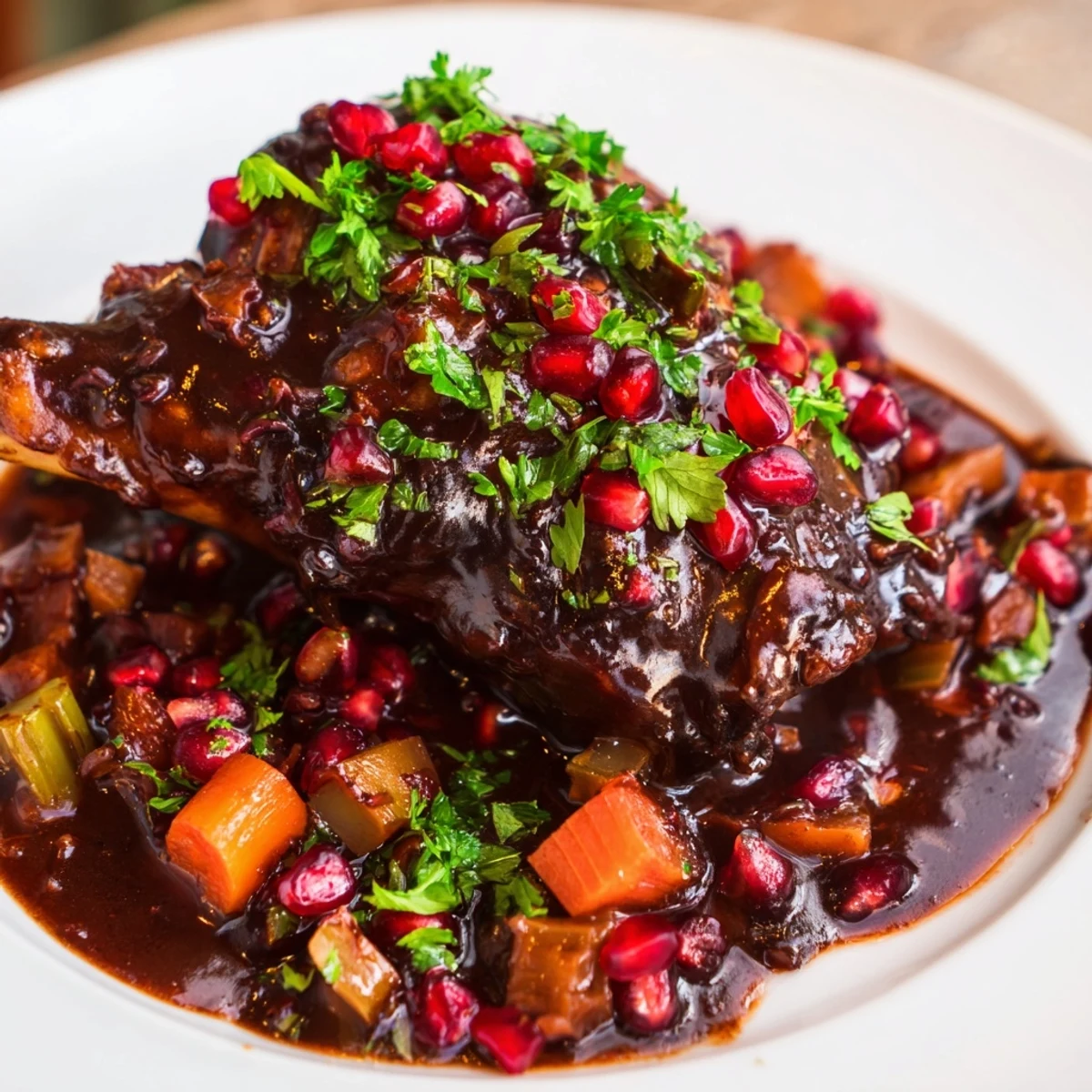
Save These tender lamb shanks are slow-cooked with a fragrant blend of cumin, coriander, and cinnamon, then braised in beef stock and pomegranate juice. Finished with a tangy pomegranate molasses glaze and fresh seeds, this dish offers a perfect balance of savory and sweet, ideal for an impressive dinner.
A friend handed me a bottle of pomegranate molasses at a market in Istanbul, insisting I had to take it home and cook with it. I wasn't sure what to do with it at first, but then I remembered my grandmother's stories about slow-cooked lamb in the Levant, and everything clicked. These lamb shanks became my way of honoring that moment, transforming those precious bottles into something that fills the whole house with the smell of spices and deep, sweet-tart complexity.
I made this for my partner on a cold winter evening when we both needed something warm and uncomplicated. Watching them spoon the sauce over rice, the pomegranate seeds catching the light, I realized this dish had become one of those meals that marks time and brings people together without trying too hard.
Ingredients
- Lamb shanks: Four shanks around 400–500 g each give you substantial, meaty portions that won't shrink away during the long braise.
- Onions, garlic, carrots, and celery: This aromatic base builds a foundation of sweetness that balances the pomegranate's tartness.
- Ground cumin and coriander: These two are the heart of the spice blend, warm and slightly earthy without overpowering.
- Ground cinnamon and allspice: A pinch of each adds depth and a subtle sweetness that makes the dish feel special.
- Smoked paprika: Just enough to give color and a whisper of smoke without making the dish taste overtly smoky.
- Pomegranate molasses: This tangy concentrate is the secret; it adds acidity and a complexity you can't replicate with regular pomegranate juice alone.
- Pomegranate juice and molasses together: The juice flavors the braising liquid while the molasses finishes with a final punch of brightness.
- Tomato paste: A couple tablespoons deepen the sauce and add umami that grounds all the other flavors.
- Beef or lamb stock: Use homemade if you have it; store-bought works fine as long as it's not too salty.
- Olive oil: Good quality matters here since it's doing the searing; don't skip on it.
- Pomegranate seeds and fresh parsley: These final garnishes brighten everything and add a textural contrast to the tender meat.
Instructions
- Get everything ready:
- Preheat your oven to 160°C (320°F) so it's waiting when you need it. Pat the lamb shanks completely dry with paper towels and season them generously with salt and pepper on all sides.
- Sear the lamb:
- Heat your olive oil in a large Dutch oven over medium-high heat until it shimmers. Place the shanks in the pot and let them sit undisturbed for a couple minutes until they develop a golden crust, then turn and repeat until all sides are browned (about 8 minutes total).
- Build the base:
- Remove the shanks and set them aside, then add your chopped onions, carrots, and celery to the same pot. Let them soften for 5–7 minutes, stirring occasionally, until they start to release their sweetness.
- Toast the spices:
- Add the minced garlic along with cumin, coriander, cinnamon, allspice, and smoked paprika. Stir constantly for about a minute until the kitchen smells incredible and the spices turn fragrant.
- Add depth:
- Stir in the tomato paste and let it cook with the spices for another minute, which deepens its flavor and removes any raw taste.
- Bring it together:
- Return the seared lamb shanks to the pot, then pour in the pomegranate juice, stock, and pomegranate molasses. Stir gently to combine, making sure the liquid comes halfway up the shanks.
- Braise low and slow:
- Cover the pot and transfer it to the oven. Let it cook for 2 to 2.5 hours, turning the shanks over halfway through, until the meat is so tender it nearly falls off the bone when you touch it with a spoon.
- Finish the sauce:
- Remove the lid for the last 20 minutes and let the sauce reduce slightly, which concentrates the flavors and gives the liquid a silky consistency.
- Serve with flourish:
- Transfer the shanks to a serving dish, spoon the gorgeous sauce over top, then scatter pomegranate seeds and fresh parsley across everything for color and brightness.
 Save
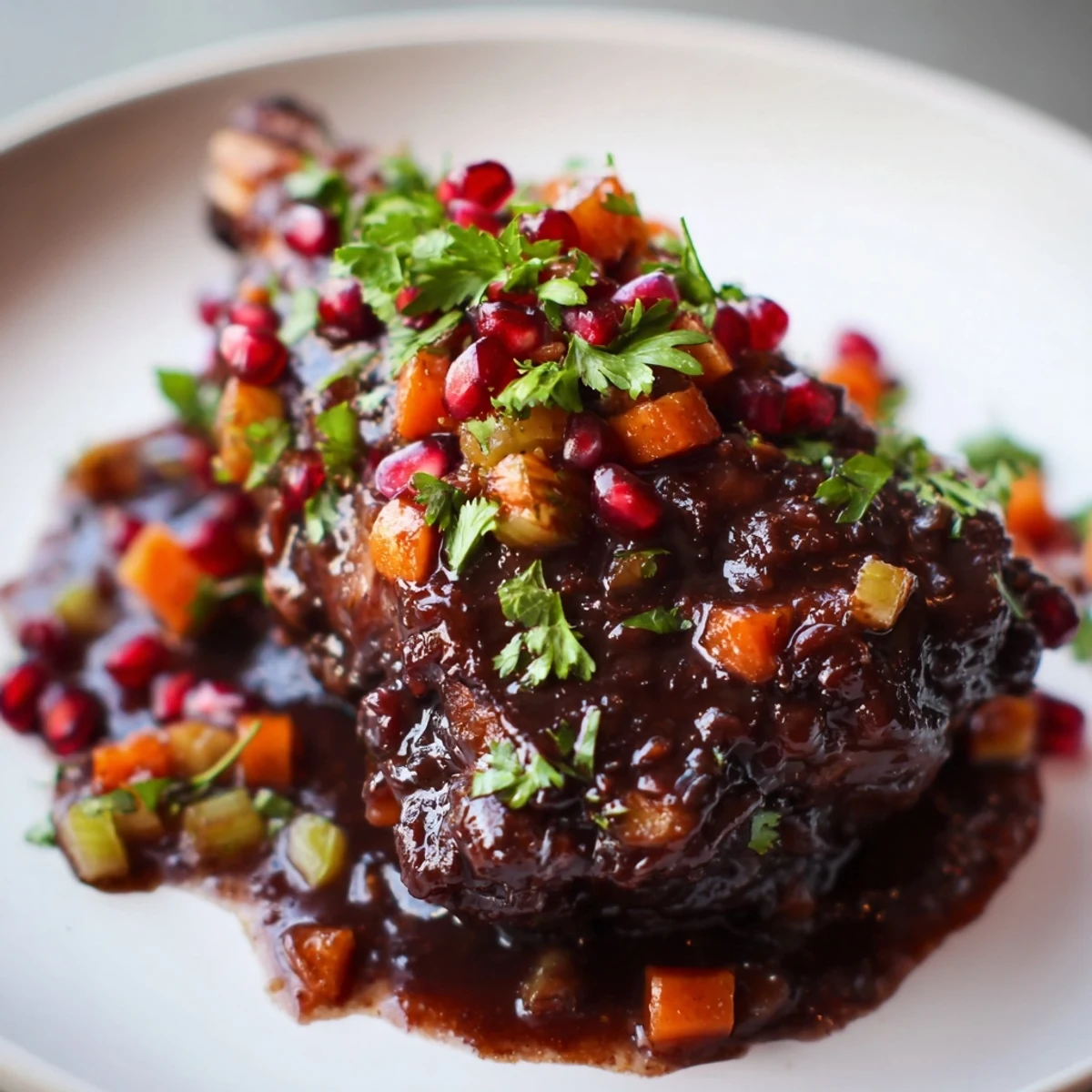
Save The first time I made this, I underestimated how much the spices would bloom in the braising liquid, and the house filled with this unexpected warmth that made everything feel ceremonial. That's when I understood this wasn't just another braise; it was a dish that demanded respect and attention.
Why Pomegranate Molasses Matters
Pomegranate molasses is not the same as pomegranate juice reduced in your kitchen. It's concentrated, slightly thick, and carries a tartness that fresh juice can't match, which is why it appears twice in this recipe. The juice flavors the braising liquid during cooking, but the molasses added at the end provides that final spark of brightness that makes your palate sit up and take notice. I've tried substituting with lemon juice or vinegar, and while they work in a pinch, they strip away the underlying sweet complexity that makes this dish feel Middle Eastern rather than generic.
Timing and Temperature
The low oven temperature of 160°C is crucial because it allows the meat to become fall-apart tender without the exterior drying out or the sauce breaking. Cooking at a higher temperature will shorten the time, but you lose the subtle way the flavors meld. I've also learned that turning the shanks halfway through prevents the top from drying out while the bottom sits in liquid, ensuring even cooking.
Serving Suggestions and Pairings
This dish shines when served with something to soak up the sauce. Saffron rice is traditional and gorgeous, couscous is easier if you're pressed for time, and roasted vegetables like eggplant or root vegetables work beautifully. I've also found that serving it family style with bread lets everyone assemble their own plate, which always feels more welcoming than plating individually.
- A robust red wine like Shiraz or Cabernet Sauvignon is the natural pairing; the tannins cut through the richness of the lamb.
- If you want to add even more depth, slip a cinnamon stick and bay leaf into the braising liquid at the beginning.
- Beef shanks work perfectly as a substitute if lamb isn't available, though they may need an extra 20–30 minutes in the oven.
 Save
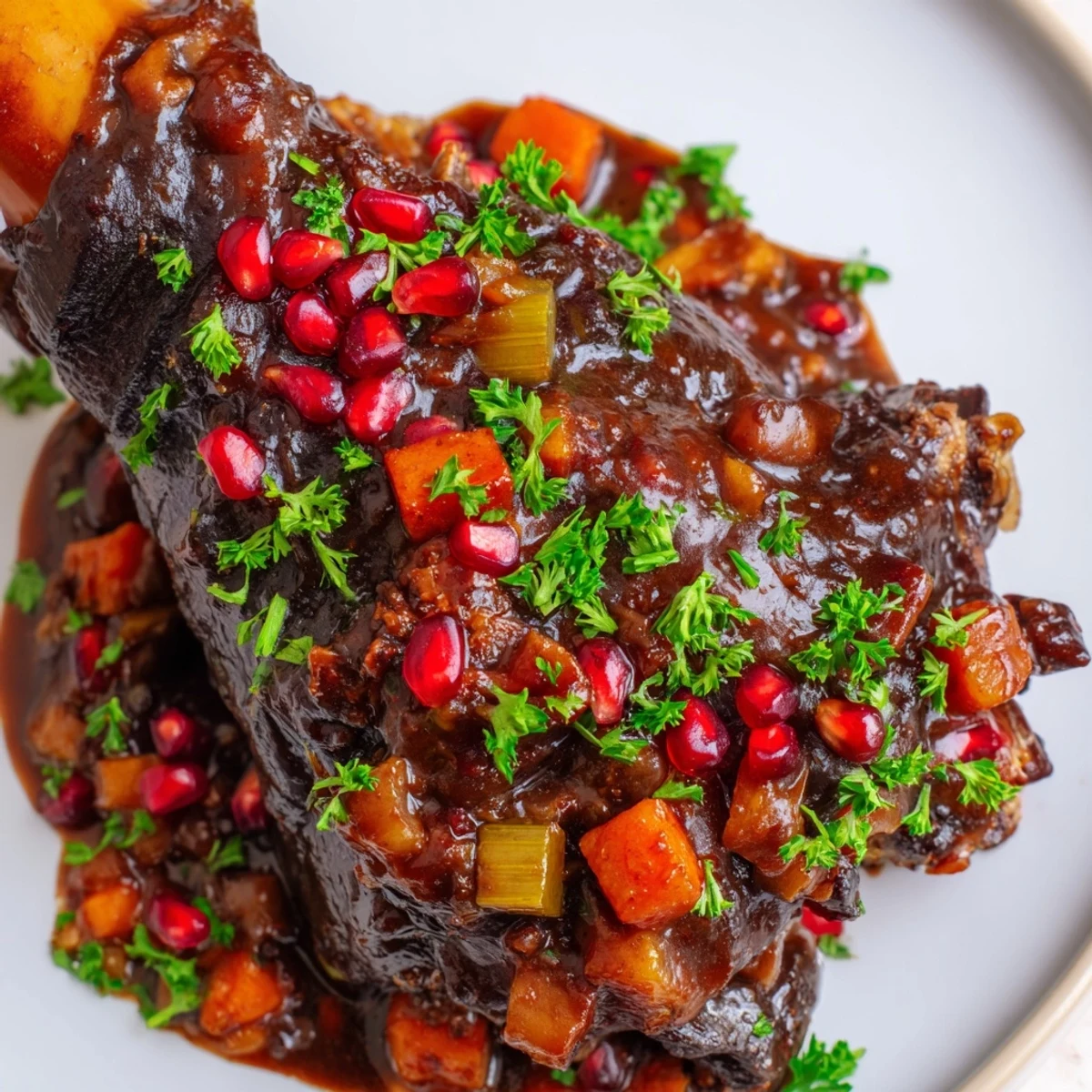
Save This lamb has become the dish I make when I want to say something without words, when I want the meal itself to do the talking. It's patient, forgiving, and rewards you with something truly special.
Recipe FAQs
- → How do I serve lamb shanks?
-
Serve with saffron rice, couscous, or roasted vegetables to soak up the rich sauce.
- → Can I use beef instead of lamb?
-
Yes, substitute beef shanks if lamb is unavailable, adjusting cooking time until tender.
- → What makes the sauce tangy?
-
The addition of pomegranate juice and molasses provides a distinct tangy and sweet flavor profile.
- → How do I thicken the sauce?
-
Remove the lid for the last 20 minutes of cooking to allow the liquid to reduce and thicken naturally.
- → What spices are used?
-
Ground cumin, coriander, cinnamon, allspice, and smoked paprika create the aromatic spice blend.