
 Save
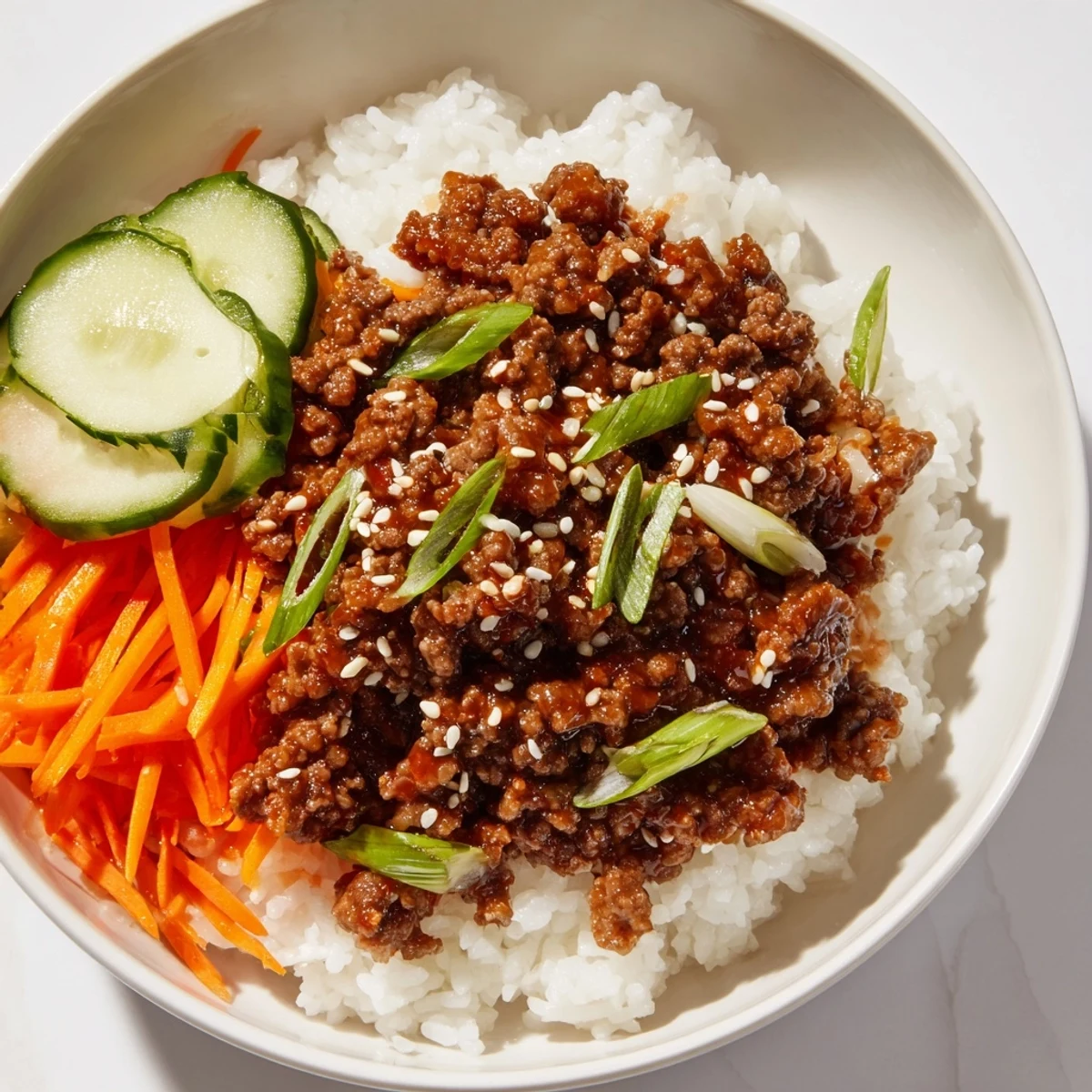
Save These Korean beef bowls come together in just 25 minutes, making them perfect for busy weeknights. Ground beef gets coated in a sweet and savory sauce made with soy sauce, brown sugar, garlic, ginger, and gochujang for authentic Korean flavor. Serve over fluffy steamed rice with crisp julienned carrots, refreshing cucumber, and aromatic scallions. Toasted sesame seeds add nutty crunch, while optional kimchi brings tangy complexity. Customize with ground turkey, chicken, or tofu for lighter variations, or adjust the heat level with more or less gochujang.
The first time I made Korean beef bowls, I was rushing to get dinner on the table before friends arrived. The aroma of sesame and garlic hit me, and I knew this was going to be a regular rotation. Everyone went quiet for a full minute, just chewing and nodding.
Last winter my sister called me at 7pm, stressed and hungry, so I talked her through this recipe over the phone. She texted later saying her husband asked if she could make it every week. Now it is their Friday tradition.
Ingredients
- 500 g lean ground beef: I have found that 85/15 ratio gives the best flavor without too much grease to drain
- 60 ml low-sodium soy sauce: Regular soy sauce can make the dish overly salty, so start with less and adjust later
- 2 tbsp light brown sugar: This creates that beautiful caramelized glaze that clings to every bite of beef
- 1 tbsp sesame oil: Toasted sesame oil is non-negotiable here because it provides that signature Korean aroma
- 4 garlic cloves, minced: Fresh garlic makes all the difference, so do not even think about using the jarred stuff
- 1 tbsp freshly grated ginger: I grate my ginger with a microplane so it practically melts into the sauce
- 1 tbsp gochujang: This Korean chili paste adds depth beyond just heat, but red pepper flakes work in a pinch
- 2 tsp rice vinegar: A splash of acidity cuts through the rich beef and balances the sweetness
- 300 g jasmine rice: Short-grain rice sticks together better, but jasmine has that lovely floral perfume
- 480 ml water: The 2:1 water to rice ratio has never failed me, but check your rice package instructions
- 2 medium carrots, julienned: The crunch of fresh carrots against the tender beef is what makes each bowl exciting
- 1 small cucumber, thinly sliced: English cucumbers work best because they have fewer seeds and stay crisp
- 4 scallions, thinly sliced: I use both the white and green parts for the full onion flavor spectrum
- 2 tbsp toasted sesame seeds: Toasting them yourself in a dry pan for 2 minutes makes them nutty and fragrant
Instructions
- Cook the rice first:
- Rinse your rice until the water runs clear, then simmer it covered for 12 to 15 minutes. Let it rest off the heat for 5 minutes before fluffing with a fork.
- Whisk the sauce:
- Combine soy sauce, brown sugar, sesame oil, garlic, ginger, gochujang, and rice vinegar in a small bowl. Stir until the sugar has completely dissolved.
- Brown the beef:
- Cook the ground beef in a large skillet over medium-high heat, breaking it up with your spatula. This should take about 5 minutes to get nice color on the meat.
- Add the sauce:
- Pour the sauce over the browned beef and cook for 2 to 3 minutes. The sauce will bubble and thicken, coating each piece of beef in a glossy glaze.
- Build your bowls:
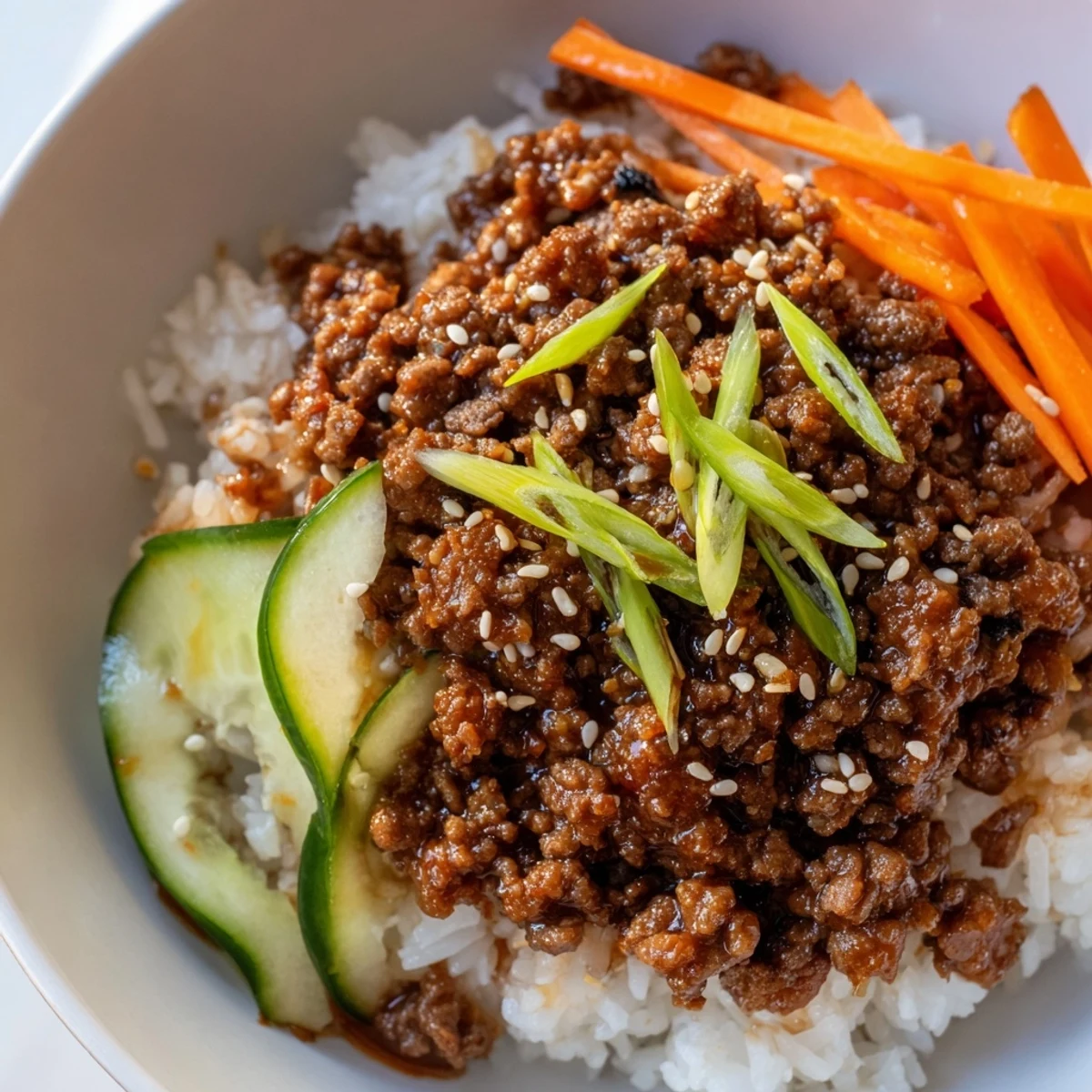
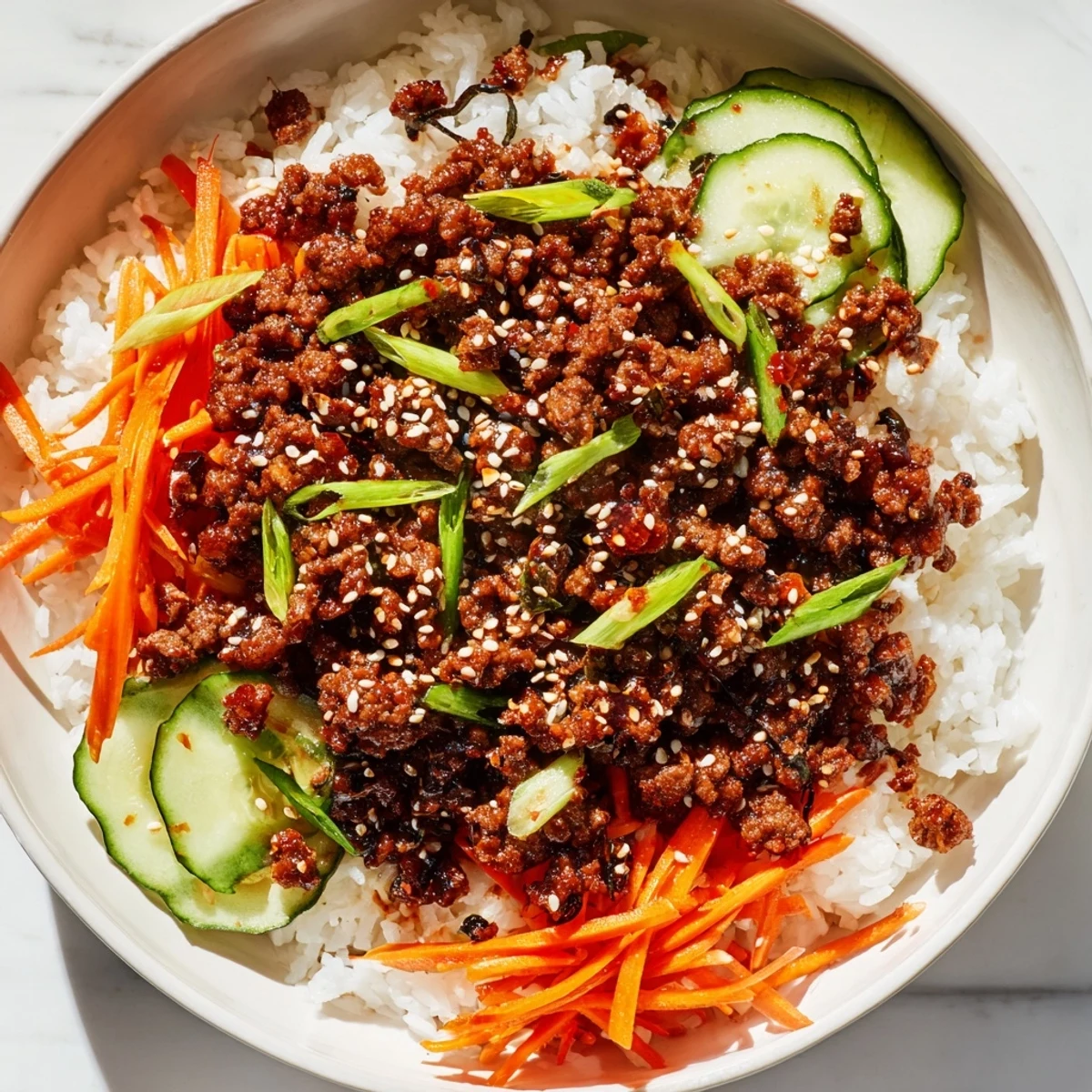
- Start with a bed of steaming rice, then pile on the beef mixture. Arrange your toppings in sections so each bite gets a different combination.
 Save
Save My daughter now requests these bowls on her birthday, which is saying something considering she used to insist that everything be separate on her plate. Watching her mix everything together and take that first perfect bite makes my entire week.
Making It Your Own
I have swapped ground beef for turkey when I wanted something lighter, and honestly, the sauce carries it beautifully. For a vegetarian version, crumbled extra-firm tofu works surprisingly well if you press it first to remove excess moisture.
Rice Wisdom
The key to restaurant-style rice is rinsing until the water runs clear, which removes excess starch for distinct grains. I also let the rice rest covered for 5 minutes after cooking, which redistributes moisture so each grain is perfectly tender.
Toppings That Transform
Fresh toppings are not optional because they provide the crunch that balances the tender beef and soft rice. I prep all my vegetables while the rice cooks so everything is ready to assemble the moment the beef is done.
- Sliced jalapeños add a fresh heat if you want to turn up the spice
- A fried egg on top creates a rich sauce when you break the yolk
- Pickled radishes bring brightness and tang that cuts through the beef
 Save
Save These bowls have become my go-to for nights when I want something that feels special but does not require me to be in the kitchen for hours. Hope they become a staple in your house too.
Recipe FAQs
- → Can I make these bowls ahead of time?
-
Yes! The beef mixture can be prepared up to 3 days in advance and stored in the refrigerator. Reheat gently on the stove or in the microwave before serving over freshly cooked rice. The vegetables are best sliced fresh for optimal texture.
- → What can I substitute for gochujang?
-
If you don't have gochujang, use red pepper flakes for heat plus a touch of miso paste or tomato paste for depth. Sriracha works in a pinch but will yield a slightly different flavor profile. For the closest match, look for gochujang in the international aisle of most grocery stores.
- → How do I make this gluten-free?
-
Simply replace the soy sauce with tamari or coconut aminos, and ensure your gochujang is certified gluten-free (some brands contain barley malt). The rest of the ingredients are naturally gluten-free.
- → Can I use other proteins?
-
Absolutely! Ground turkey, chicken, or pork work beautifully with the same sauce. For a vegetarian version, use crumbled firm tofu or tempeh—just press out excess moisture first and brown well to develop flavor. Plant-based ground meat alternatives also work well.
- → What other toppings can I add?
-
Fried or soft-boiled eggs make a great addition. Sautéed spinach, bean sprouts, pickled radishes, or sliced avocado add variety. For extra crunch, try crushed roasted peanuts or cashews. Fresh herbs like basil, mint, or Thai basil offer bright contrast to the rich beef.