
 Save
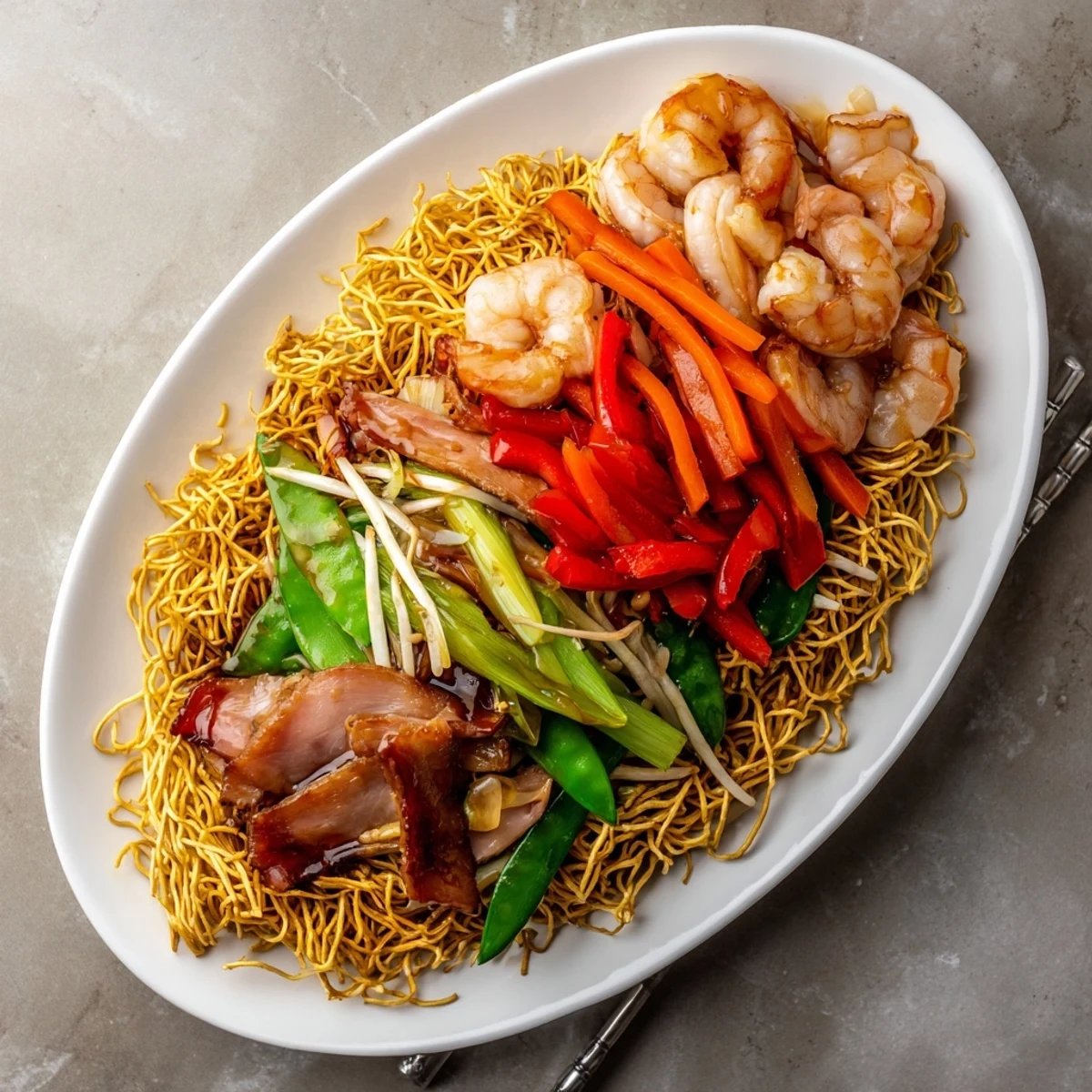
Save This beloved Cantonese classic transforms fresh egg noodles into a crispy golden base, crowned with an aromatic medley of proteins and vegetables. The dish features tender marinated chicken, sweet shrimp, and smoky char siu pork, complemented by crunchy snow peas, bell peppers, and bean sprouts. A luscious sauce blending light soy, oyster sauce, and Shaoxing wine ties everything together with umami depth. The key lies in achieving the perfect crispy noodle foundation—cooking undisturbed until golden—then topping it with the vibrant stir-fry just before serving.
The steam rising from a chow mein platter at my aunt's Sunday dinners always pulled me toward the kitchen before anything else was ready. Something about that contrast between the golden crispy noodle cake underneath and the glistening vegetable laden topping made it feel like celebration food. It took me years to realize the magic isn't in some restaurant secret but in patience and timing.
My first attempt ended with soggy noodles because I couldn't resist stirring them. The wok hissed and steamed but never achieved that signature crunch. Now I treat the noodle frying like a meditation no touching no checking just trust the process.
Ingredients
- 400 g fresh egg noodles: Fresh noodles yield the crispest results but thin Chinese wheat noodles work beautifully too
- 2 tbsp vegetable oil: Split between frying noodles and stir frying the topping
- 150 g boneless chicken breast: Thinly slicing against the grain ensures tender pieces
- 100 g shrimp: Peeled and deveined saves precious cooking time
- 100 g char siu: Chinese BBQ pork adds authentic sweetness but roast pork makes a fine substitute
- 1 small carrot: Julienned for quick cooking and vibrant color
- 1/2 red bell pepper: Thin slices provide sweetness and crunch
- 100 g bean sprouts: Add these last to maintain their fresh snap
- 2 spring onions: Both white and green parts bring mild onion flavor
- 100 g snow peas: Trimmed ends make for elegant presentation
- 2 tbsp light soy sauce: The foundation of savory depth
- 1 tbsp oyster sauce: Adds umami richness and subtle sweetness
- 1 tbsp Shaoxing wine: Dry sherry works in a pinch but nothing quite replaces this Chinese cooking wine
- 1 tsp sugar: Balances the saltiness and helps vegetables glaze
- 1 tsp sesame oil: Finish with this for fragrant nutty aroma
- 1/2 cup chicken stock: Creates the silky sauce that binds everything together
- 1 tsp cornstarch mixed with water: The secret to perfectly thickened glossy sauce
- 1 tsp soy sauce 1/2 tsp cornstarch pinch white pepper: This simple marinade transforms plain chicken and shrimp into silk seasoned protein
Instructions
- Prep your proteins:
- Toss chicken and shrimp with the marinade ingredients and let them rest for 10 minutes while you prep everything else
- Blanch the noodles:
- Drop fresh noodles into boiling water for just 1 to 2 minutes then drain them thoroughly and let them cool slightly
- Create the crispy noodle base:
- Heat half the oil in your wok and spread noodles evenly then let them cook undisturbed for 3 to 4 minutes until golden before flipping and repeating
- Sear the proteins:
- Add remaining oil to the wok and stir fry chicken until nearly cooked through then toss in shrimp until they turn pink
- Add the aromatics and vegetables:
- Toss in char siu carrot bell pepper and snow peas stir frying for 2 to 3 minutes until everything brightens
- Freshen with quick cooking vegetables:
- Add bean sprouts and spring onions for just 1 minute to keep their crunch intact
- Build the sauce:
- Pour in combined sauce ingredients except cornstarch slurry and let it bubble up before stirring in the thickener
- Assemble and serve immediately:
- Pour the sizzling vegetable mixture and thickened sauce over your waiting crispy noodle cake
 Save
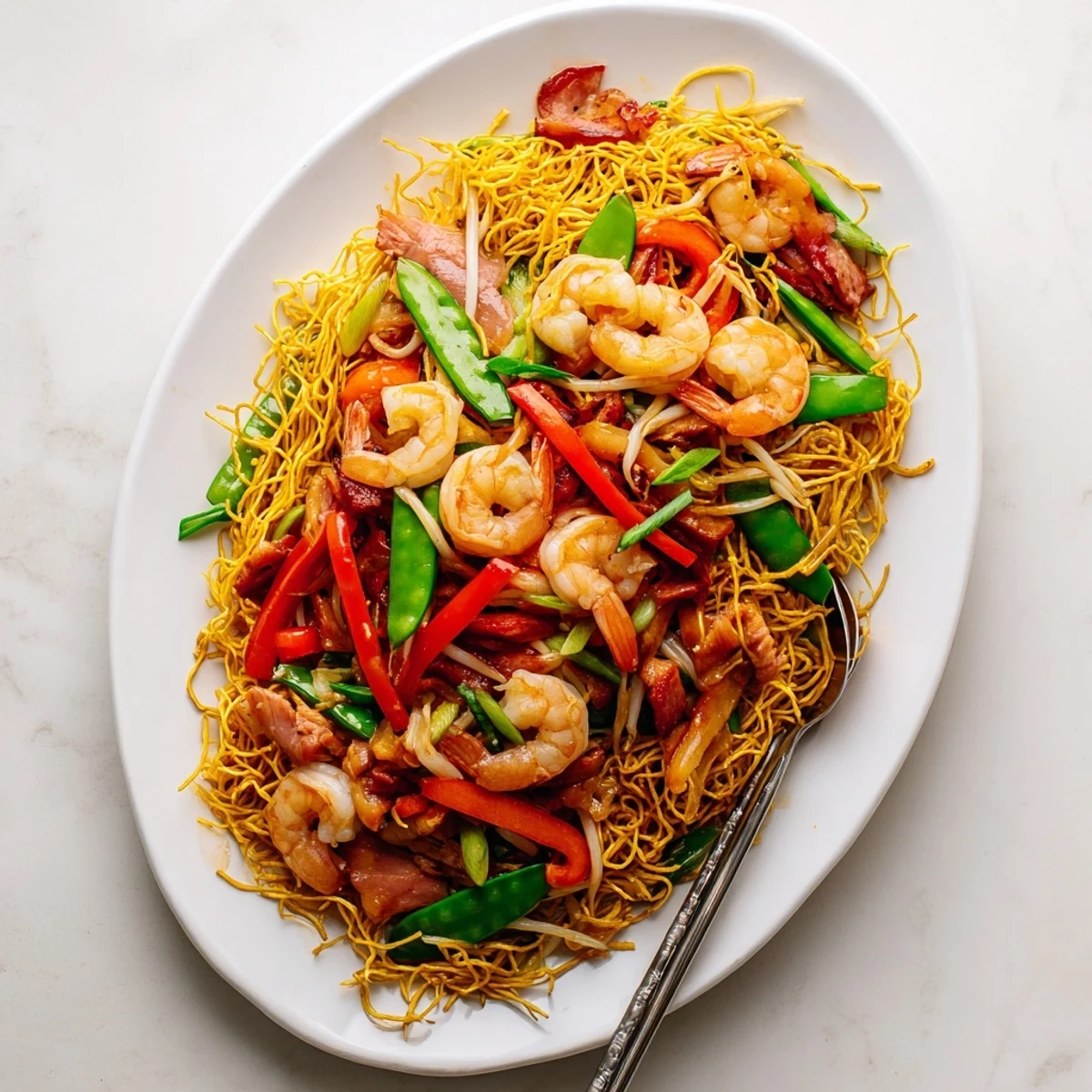
Save This recipe became my go to for unexpected guests because it looks impressive but actually comes together in under an hour. Last summer my neighbor asked for the recipe after catching the aroma through our open kitchen window.
Making It Vegetarian
Replace the chicken and shrimp with firm tofu cubes and load up on more vegetables like mushrooms bok choy or bamboo shoots. The technique remains exactly the same.
Noodle Variations
Hong Kong style egg noodles work best but I've used rice noodles for a gluten free version and even spaghetti in emergencies. Fresh noodles always crisp better than dried ones.
Sauce Secrets
Adjust the sauce thickness by adding more stock if it becomes too thick or letting it reduce longer if you prefer it more concentrated. The sauce should coat the back of a spoon.
- Mix the cornstarch slurry right before adding or it will settle
- Taste the sauce before thickening since adjusting salt is easier then
- Keep leftover sauce warm in case guests want extra at the table
 Save
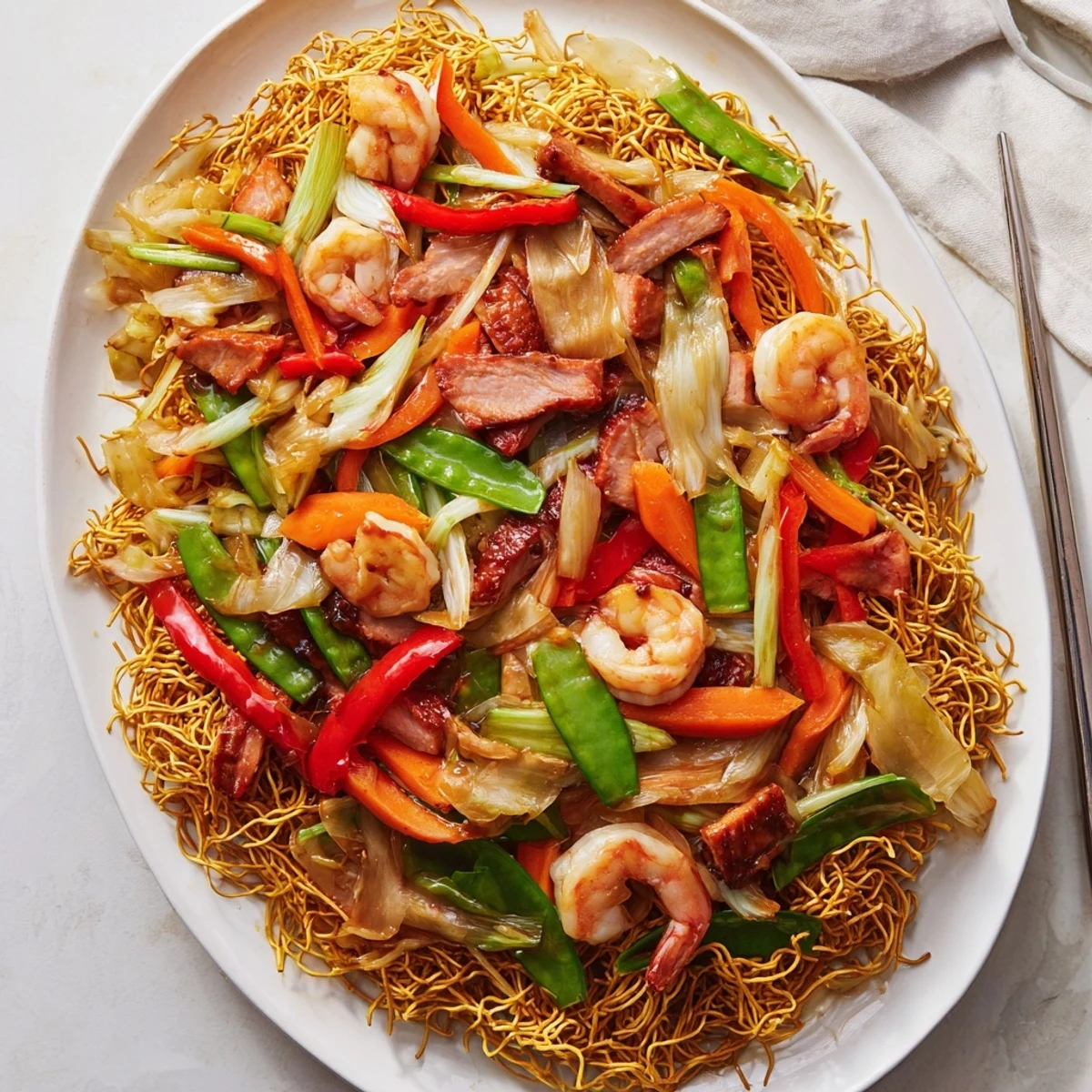
Save There's something deeply satisfying about hearing that first crack of the spoon breaking through crispy noodles into tender sauce beneath. Serve it hot and watch everyone lean in.
Recipe FAQs
- → What makes Cantonese chow mein different from other stir-fried noodles?
-
Cantonese chow mein features a unique crispy noodle base that's pan-fried until golden and crunchy, then topped with a saucy stir-fry. This contrasts with lo mein where noodles remain soft throughout cooking. The texture combination of crisp base and tender topping creates the dish's signature appeal.
- → Can I make chow mein ahead of time?
-
Prepare all ingredients in advance, but cook the noodles and stir-fry just before serving for optimal texture. The crispy noodle base loses its crunch if made too early. You can marinate proteins and chop vegetables up to 4 hours ahead, then cook everything when ready to eat.
- → What's the best way to achieve crispy noodles?
-
Use fresh egg noodles and blanch them briefly first. When pan-frying, spread noodles evenly, press gently, and cook undisturbed over medium-high heat for 3-4 minutes per side. Avoid overcrowding the pan, and ensure noodles are thoroughly drained before frying to prevent steaming.
- → Can I substitute the proteins?
-
Absolutely. Replace chicken with beef, pork, or firm tofu. Skip shrimp or use scallops instead. Vegetarians can use extra-firm tofu, mushrooms, and additional vegetables. The key is maintaining a variety of textures and flavors in the topping mixture.
- → What vegetables work best in chow mein?
-
Classic choices include bean sprouts for crunch, bell peppers for sweetness, snow peas for freshness, and carrots for color. Bok choy, mushrooms, bamboo shoots, or water chestnuts also work well. Aim for vegetables that maintain some crisp-tender texture when stir-fried quickly.
- → How do I adjust the sauce consistency?
-
The cornstarch slurry thickens the sauce to coat the toppings evenly. For a thicker sauce, add more cornstarch mixture. For lighter consistency, reduce cornstarch or add more stock. The sauce should be glossy and cling to ingredients without being gluey.